A deadly cluster of hantavirus cases aboard a cruise ship in the Atlantic is raising urgent questions for Caribbean small island states — and for Dominica in particular, as the Nature Island navigates the most ambitious tourism expansion in its history.
⚠ Situation as of 8 May 2026: The Dutch-flagged expedition cruise ship MV Hondius is en route to Tenerife, Spain, carrying approximately 147 passengers and crew following a confirmed hantavirus outbreak. As of today, WHO has recorded 5 confirmed cases, 3 suspected cases, and 3 deaths. Passengers from 23 nationalities were on board. A separate case has been confirmed in Switzerland. The Andes strain — the only hantavirus known to transmit person-to-person — has been confirmed.
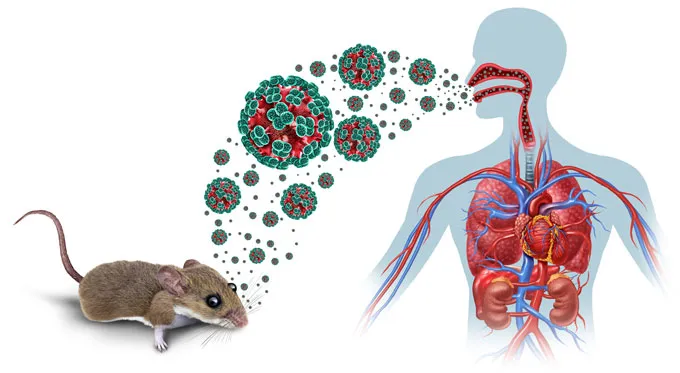
When we think about public health threats to the Caribbean, we typically think about dengue, leptospirosis, influenza, or the slow-moving crisis of non-communicable diseases. Hantavirus does not usually feature in those conversations. It is endemic to South America, primarily transmitted by rodents, and rarely makes headlines this far north.
That calculus changed this week.
The unfolding outbreak aboard the MV Hondius — a luxury expedition vessel that departed Ushuaia, Argentina on 1 April 2026 and has since recorded three deaths and eight cases across multiple countries — is not just a maritime tragedy. It is a stress test for how Caribbean nations handle emerging infectious disease threats arriving by sea, in real time, with incomplete information and no specific treatment available.
As someone who has spent twelve years working at the intersection of public health, disaster preparedness, and community resilience in Dominica, I want to examine what this outbreak specifically means for us — for our health infrastructure, for our communities, and for the tourism product that our island is staking its economic future on.
The Outbreak: What We Know
The MV Hondius departed Argentina on 1 April 2026, with plans to visit Antarctica and several isolated islands in the South Atlantic. As of 6 May 2026, at least three people on board had been infected by the Andes strain of the virus — the only known hantavirus capable of human-to-human transmission, though this is extremely rare. There were five confirmed cases, three suspected cases, and three deaths.
The first suspected case was a 70-year-old Dutch national who suddenly fell ill with fever, headache, abdominal pain and diarrhoea. He died on board on April 11. His wife subsequently deteriorated during a flight to Johannesburg on 25 April and died upon arrival at the emergency department on 26 April. Contact tracing for passengers on that flight was immediately initiated.
According to WHO, the passengers who fell ill developed symptoms between April 6 and 28, including fever, gastrointestinal symptoms, and rapid progression to pneumonia, acute respiratory distress syndrome and shock. WHO epidemiologist Maria Van Kerkhove confirmed that hantavirus is transmissible from person to person only through close contact, such as sharing a bed or food — unlike influenza or COVID-19.
On 6 May, the ship intended to dock in Tenerife for passenger evacuation, but the president of the Canary Islands refused to receive the vessel, citing concerns for the safety of islanders. WHO responded that Spain had a moral and legal obligation to assist, given that several Spanish nationals were among those on board.
What makes this outbreak unusually significant — and worth examining carefully from a Caribbean public health perspective — is the combination of factors at play: a confined ship environment, a virus with a one-to-eight-week incubation window, passengers from 23 nationalities who have since dispersed across the globe, and a strain with a documented if rare capacity for human-to-human spread.
“The Hondius outbreak is not just a maritime tragedy. It is a stress test for how Caribbean nations handle emerging infectious disease threats arriving by sea, with incomplete information and no specific treatment available.”
Is Hantavirus a Direct Threat to Dominica?
The direct threat to Dominica from this specific outbreak is currently low. The MV Hondius is not in, and has not transited through, Caribbean waters. WHO currently assesses the risk to the global population from this event as low. The Andes strain is geographically centred in southern South America and is not known to be established in Caribbean rodent populations.
However, the picture is more nuanced than a simple risk-level assessment suggests — and nuance is exactly what small island public health systems need to be preparing for right now.
First, the research evidence. The first evidence of hantavirus infections in the Caribbean was observed in Barbados, among human cases suspected of leptospirosis and also in rodents. Further evidence of hantavirus circulation was subsequently documented in Grenada and Trinidad and Tobago. The specific strains, and their pathogenicity for humans in the Caribbean context, remain uncharacterised. This is not a reason for alarm. It is a reason for surveillance. The Caribbean is not a hantavirus-free zone. It is a zone where the data is incomplete.
Second, the tourism exposure pathway. Dominica is not on this particular ship’s route. But the broader risk the MV Hondius represents is entirely relevant to us. Cruise passengers who travel through South America and then continue to the Caribbean — an extremely common itinerary — represent a potential bridge between hantavirus-endemic zones and Caribbean ports of call. The wide incubation range of one to eight weeks makes it difficult to pinpoint exactly where an infection occurred, particularly on a voyage spanning multiple weeks and continents. A passenger infected in Patagonia could be entirely asymptomatic when boarding in Barbados and symptomatic by the time they reach Roseau.
Dominica’s Tourism Boom and Its Public Health Implications
The timing of this outbreak matters because of where Dominica currently stands in its tourism trajectory.
Dominica concluded 2025 with 488,091 total visitor arrivals — up 13% year-on-year and nearly 50% above pre-pandemic 2019 levels. Cruise passenger arrivals reached 375,646, the strongest performance since 2011. Dominica’s goal is to reach half a million annual stayover visitors and 1 million cruise visitors by 2030.
The island is in the midst of its most ambitious infrastructure expansion, with nearly 500 new hotel rooms debuting in 2025 and a new Boiling Lake cable car system expected to draw 20,000 visitors a year. A new international airport is well underway, with major construction work in the 80–90% completion range as of December 2025, targeting commissioning in 2027.
The Nature Island brand — built on eco-tourism, adventure, and immersive natural experiences — is succeeding precisely because it attracts the kind of traveller who goes off the beaten path. That is exactly the same traveller profile as the MV Hondius passenger list.
Passengers on the Hondius visited some of the world’s most remote islands, where they engaged in birdwatching and wildlife activities. WHO noted that rodents live in some of these places, raising the possibility of additional sources of infection on the islands themselves. Dominica’s rainforest trails, volcanic gorges, whale-watching excursions, and expanding ecotourism portfolio are precisely the kind of environments where wildlife-human interface risks are highest. This is not a reason to restrict tourism. It is a reason to build the public health infrastructure that allows tourism growth to be safe, sustainable, and resilient.
The Critical Gap: Health System Capacity
Here is the hard truth that the MV Hondius outbreak illuminates for every Caribbean small island state: the scenario that unfolded on that ship — multiple critically ill patients requiring ICU-level isolation, PCR testing for rare pathogens, medical evacuation, and multi-country contact tracing — would overwhelm the health systems of virtually every Eastern Caribbean island, including Dominica.
Dominica has one referral hospital — the Dominica China Friendship Hospital in Roseau. It does not have a dedicated infectious disease isolation unit of the standard required for a confirmed Andes hantavirus case. No effective antiviral treatment is available; supportive care is key for a better chance of survival. PCR testing for hantavirus is not available locally; samples would need to be sent to a regional reference laboratory, adding days to any diagnostic timeline.
In 2025, 229 confirmed hantavirus cases and 59 deaths were recorded across eight countries in the Americas, representing a fatality rate of roughly 26%. A case presenting at DCFH without prior clinical suspicion could easily be missed until it reached the critical stage — at which point the window for effective supportive intervention narrows rapidly.
None of this is a criticism of DCFH or the dedicated health professionals who staff it. It is a structural reality of small island health systems that is well understood within the public health community but rarely communicated with the urgency it deserves to tourism industry stakeholders and policymakers.
“The scenario unfolding on the MV Hondius — multiple critically ill patients requiring ICU-level isolation, rare pathogen testing, and multi-country contact tracing — would overwhelm the health systems of virtually every Eastern Caribbean island.”
What Dominica Should Do Now
Five concrete actions, implementable immediately:
1. Issue a port health advisory. For vessels arriving from or transiting through South American ports, particularly Argentina and Chile, require declaration of illness for all passengers exhibiting fever, respiratory symptoms, or gastrointestinal illness within the past six weeks.
2. Brief DCFH clinical staff on hantavirus presentation. Clinical manifestation includes fever, respiratory symptoms, gastrointestinal symptoms, and rapid progression to pneumonia, acute respiratory distress, and shock. Establish a provisional isolation and escalation protocol for suspected cases, including the regional medical evacuation pathway.
3. Engage CARPHA and PAHO Caribbean. Activate the regional early warning system and ensure Dominica is included in any regional hantavirus surveillance update. PAHO has been actively strengthening regional hantavirus and arenavirus surveillance capacities in the Americas in collaboration with the CDC and the Gorgas Commemorative Institute. Dominica should be connected to that network now.
4. Commission a rapid rodent control review. Assess protocols at all cruise terminals, eco-tourism sites, and rainforest trail access points. Preventive measures should address occupational and ecotourism-related exposures, and include rodent control strategies.
5. Communicate proactively with the tourism industry. A brief, factual advisory from the Ministry of Health to tour operators, hotel managers, and shore excursion providers — explaining the current situation, the low direct risk, and the precautionary measures in place — will protect Dominica’s reputation far more effectively than silence will.
The Tourism Product Is Only as Strong as the Health System Behind It
Dominica has built its brand around nature, safety, and authenticity. The MV Hondius outbreak is a reminder that in a world of interconnected travel, no destination is hermetically sealed from emerging infectious disease.
The good news is that Dominica has time, right now, to take sensible precautionary steps. The outbreak is not in the Caribbean. The direct risk is low. The window for preparedness is open. What we should not do is wait until a febrile passenger with a two-week-old Argentina birdwatching stamp in their passport presents at DCFH before asking whether we have a protocol in place.
Every dollar Dominica invests in health system capacity — in clinical training, in diagnostic infrastructure, in port health surveillance, in One Health surveillance that tracks the human-animal-environment interface — is also an investment in the durability and trustworthiness of the tourism product. These things are not in tension. They are the same investment.
The Nature Island’s greatest competitive advantage is not just its landscapes. It is the promise, implicit in every tourism marketing campaign, that it is a safe place to explore the natural world. Keeping that promise requires a public health system that is ready for what the natural world occasionally sends our way.
#Hantavirus #PublicHealth #Caribbean #Dominica #OneHealth #InfectiousDisease #CruiseTourism #HealthResilience #SIDS #EmergingThreats